
How to Stop Excessive Shower Water Use: 7 Proven Methods
Last Updated: October 23, 2026
Quick Summary
To stop excessive shower water use, install a low-flow showerhead that delivers 2.0 to 2.5 gallons per minute instead of 3.5 to 5.0, and add a visible shower timer to encourage shorter showers. Together, these tools can reduce water consumption by 40% or more while maintaining water pressure.
- A standard showerhead flows at 2.5 gallons per minute, while older models run 3.5 to 5 gallons per minute.
- An 8-minute shower at 2.5 gallons per minute uses 20 gallons of water.
- Turning off water while soaping saves 5 to 8 gallons per shower.
- A shower timer creates awareness and typically reduces shower duration from 8 minutes to 5 minutes.
- A 40-unit apartment complex can save $2,683 annually by installing low-flow showerheads and timers with a 4.5-year payback period.
Table of Contents
- Measure Your Current Shower Water Use
- Why Household Shower Water Consumption Spikes
- How Much Water Does a Shower Use and Where It Goes
- Install a Shower Timer to Save Water
- Switch to a Low-Flow Showerhead for Water Savings
- How to Save Water in the Shower Through Behavior Change
- Practical Ways to Encourage Shorter Showers in Shared Facilities
- Calculate Real Water and Cost Savings for Your Facility
- Frequently Asked Questions
Measure Your Current Shower Water Use
Before you can stop excessive shower water use, you need a baseline. Most facilities just know their water bill is high.
Start by measuring your shower's flow rate.
A standard showerhead flows at 2.5 gallons per minute. Older showerheads often run 3.5 to 5 gallons per minute. If yours is above 2.5, you've found your first problem.
Next, track how long showers actually last at your facility. This is harder than it sounds. Most people underestimate their shower time by 50%.
Multiply your flow rate by average shower duration. That's your water volume per shower.
Why Household Shower Water Consumption Spikes
High shower water use doesn't happen by accident. Here's why your facility's consumption is above average.
Older fixtures are the biggest culprit. Showerheads made before 1992 have no flow restrictions and dump 5 or more gallons per minute.
Behavior drives consumption even more than hardware. People take longer showers when someone else pays the bill.
Broken or leaking fixtures waste water constantly. A dripping showerhead wastes 2,700 gallons per year, and many facility managers don't notice until the water bill arrives.
The pattern is consistent across property types: when water feels free, people use more. When they can see or feel the impact of their use, they adjust.
How Much Water Does a Shower Use and Where It Goes
Understanding water volume helps you set realistic reduction targets.
A standard shower at 2.5 gallons per minute for 8 minutes uses 20 gallons. A longer shower at 10 minutes uses 25 gallons. An older showerhead at 4 gallons per minute for 8 minutes uses 32 gallons.
For facilities, this adds up fast:
- A 50-bed college dorm with average 8-minute showers uses 8,000 gallons per day
- A 40-unit apartment complex with two showers per unit uses 6,400 gallons per day
- A gym with 200 daily users and 10-minute showers uses 5,000 gallons per day
Where does the water go? Much of it is wasted before the shower even starts.
When you turn on a shower, cold water fills the pipes. Users wait for hot water to arrive. This can take 30 seconds to 2 minutes depending on distance from the water heater.
The shower itself rinses your body, soap, and shampoo, but most people run water continuously instead of turning it off while soaping. That's habit, not necessity.
The remaining water heats your home or facility. Hot water requires energy. A typical family uses 30% of household energy for water heating.
Install a Shower Timer to Save Water
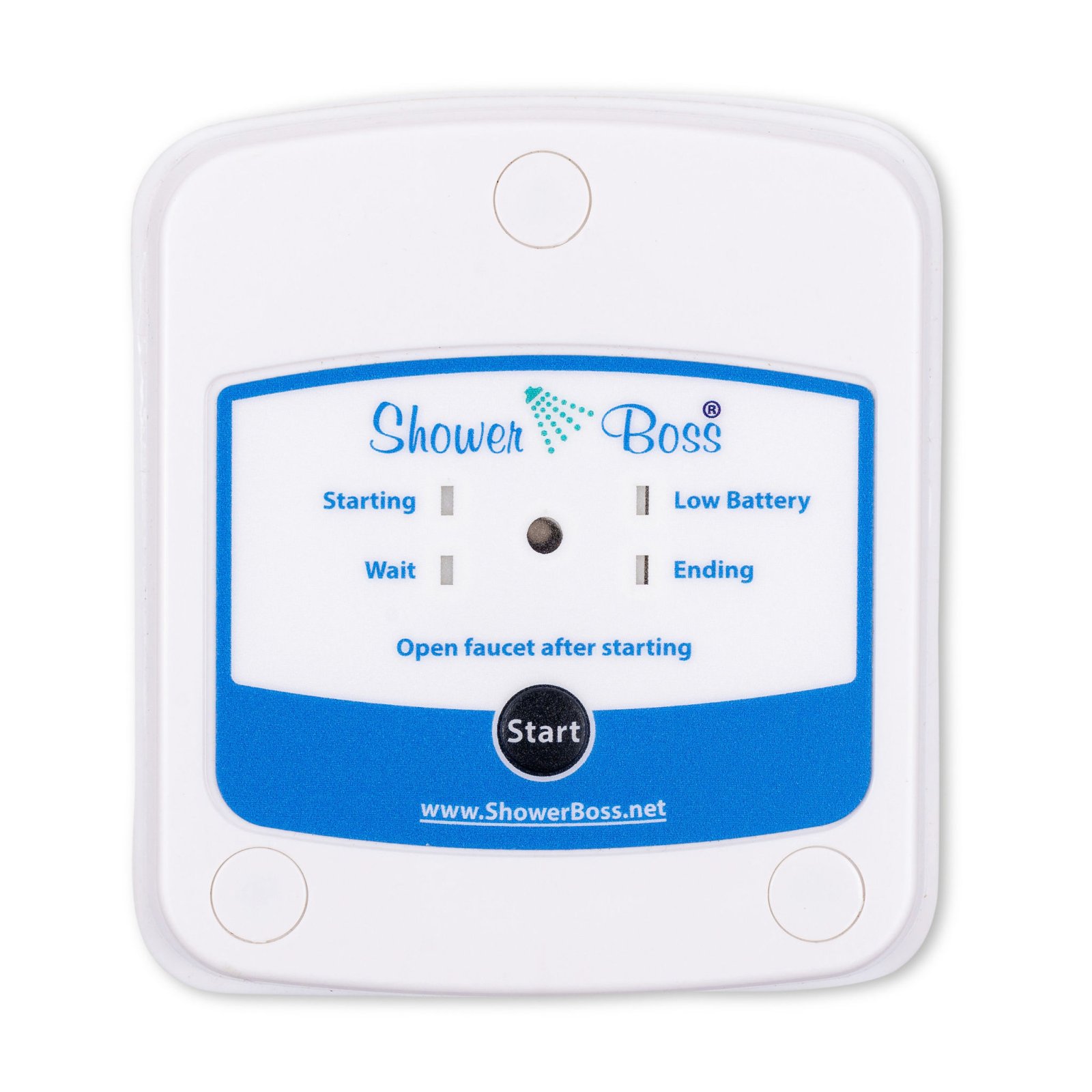
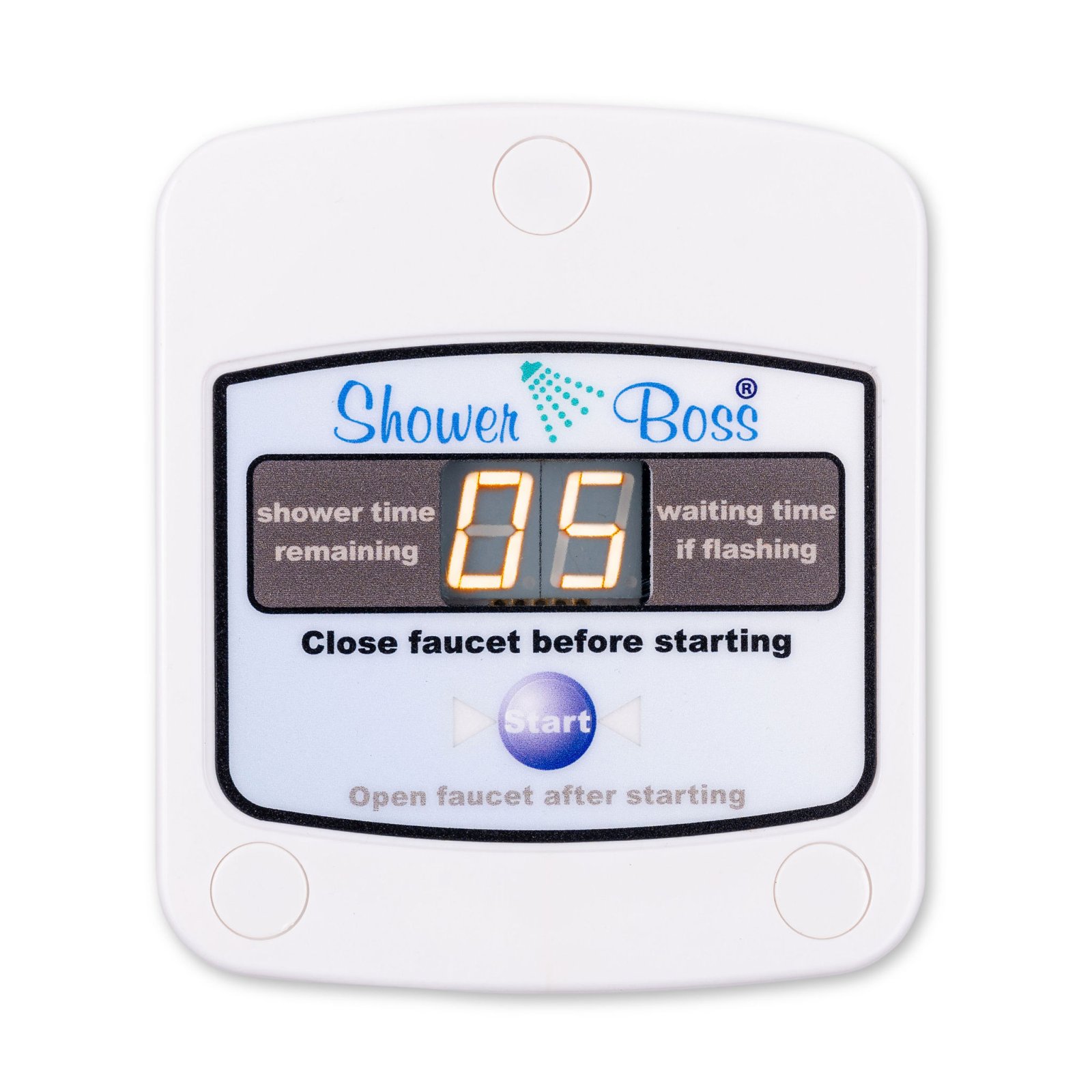
A shower timer is the single most effective tool for reducing excessive shower water use. It's simple, reliable, and works in every facility type.
Most timers beep at 4 minutes and again at 8 minutes, and some have visual displays. The timer doesn't force compliance, it creates awareness, and users adjust.
We recommend the ShowerTimer Standard Unit with 12V Plug-In Power Supply for most facilities.

For facilities without hardwired power, the ShowerTimer Battery Unit 9V offers flexibility. It requires six AA batteries and costs $250. No installation required.

For residential settings, the ShowerTimer Residential Unit with 12V Plug-In Power Supply at $250 is purpose-built. It has adjustable settings and works with standard bathroom fixtures.

Installation matters. If you have custom installation needs or want guidance on selecting the right timer for your specific setup, helpful ideas with custom installation needs are available to ensure optimal placement and performance.
Switch to a Low-Flow Showerhead for Water Savings
A low-flow showerhead is hardware. A timer is behavior. Together, they cut water use in half.
Low-flow showerheads deliver 2.0 to 2.5 gallons per minute instead of 3.5 to 5.0. Modern designs maintain pressure, so water feels strong even though volume is lower.
WaterSense-labeled showerheads meet strict EPA standards, use no more than 2.0 gallons per minute, and deliver consistent performance. If you're buying new, choose WaterSense.
Older showerheads cost $15 to $40. WaterSense showerheads cost $25 to $60. The difference is small.
Installation is simple: unscrew the old head, screw on the new one. No tools or plumber required, a 5-minute job per shower.
The challenge is user perception. Some people believe low-flow showerheads feel weak. This is outdated. Modern designs are excellent. But perception matters.
How to Save Water in the Shower Through Behavior Change
Hardware alone doesn't eliminate excessive shower water use. Behavior change is required.
Turn Off Water While Soaping or Shaving
This is the easiest habit to change, no new equipment, just remembering.
Wet your body. Turn off the water. Soap up. Shampoo. Then turn the water back on to rinse. This saves 5 to 8 gallons per shower. For a family of four showering daily, that's 7,300 to 11,600 gallons per year.
In facilities, this habit is harder to enforce. People are in a hurry. They don't think about conservation. A visible timer or sign helps. "Turn off water while soaping" is clearer than "save water."
Shorten Shower Duration
Most people can shower in 5 minutes with intention, not hardship.
ShowerTimer Standard Unit / with 12V Plug-In Power Supply →
The average shower is 8 to 10 minutes. Reducing to 5 minutes cuts water use by 40 to 50%. A 5-minute shower at 2.5 gallons per minute uses 12.5 gallons. An 8-minute shower uses 20 gallons. The difference is 7.5 gallons.
For a 50-bed dorm with 100 daily showers, reducing from 8 to 5 minutes saves 750 gallons daily. Over a year, that's 273,750 gallons.
The challenge is making 5 minutes feel normal. In facilities, this requires messaging. Post signs. Announce it during orientation. Make shorter showers a stated goal.
Use a Timer to Track Shower Length
A visible timer creates accountability. Users see time passing. They adjust.
Physical timers beat phone timers, people don't bring phones into showers, and a wall-mounted timer that beeps is impossible to ignore.
Set it for your target duration. Four minutes for quick showers. Eight minutes for thorough showers. Users see the timer and pace themselves. Most people finish before the timer goes off once they're aware.
Reduce Water Flow With a Restrictor or Flow-Control Device
A flow restrictor limits water volume without affecting pressure. It's a simple device installed inside the showerhead or valve.
Restrictors cost $5 to $20. They're invisible to users. Water feels the same. Volume is lower.
Installation requires opening the showerhead or valve. For facilities, this is a 10-minute job. For residential, it's a weekend project.
The advantage over replacing the entire showerhead is cost. If you have 50 showers, restrictors cost $250 to $1,000. New showerheads cost $1,250 to $3,000. Restrictors are a budget option.
The disadvantage is durability. Restrictors can clog if water quality is poor. They may need replacement every 2 to 3 years.
Practical Ways to Encourage Shorter Showers in Shared Facilities
Make the goal visible. Post signs in bathrooms.
Install timers at eye level. A timer hidden in the corner is ignored.
Provide feedback. Post weekly water use. "Last week: 12,000 gallons. Target: 10,000 gallons." Numbers matter.
Train staff to model behavior. If staff take quick showers, residents notice. Culture spreads.
Avoid shaming. Don't post individual names or shame long showers. This creates resentment.
Address comfort concerns directly. People worry low-flow showerheads feel weak or timers feel uncomfortable.
The most effective approach combines hardware (timers, low-flow heads) with messaging (visible goals, feedback, staff modeling).
Calculate Real Water and Cost Savings for Your Facility
Numbers make the case for action. Calculate potential savings before investing in timers or new showerheads.
Start with baseline data:
- Number of showers per day
- Current flow rate (gallons per minute)
- Current average shower duration
- Local water rate per gallon
Example: 40-unit apartment complex, 80 daily showers, 3.5 gallons per minute, 8-minute average, $0.008 per gallon.
Current daily use: 80 showers × 3.5 gpm × 8 minutes = 2,240 gallons per day. Current daily cost: 2,240 gallons × $0.008 = $17.92 per day. Annual cost: $17.92 × 365 = $6,543.
Apply realistic reductions:
- Install low-flow showerheads: reduce flow from 3.5 to 2.5 gpm (29% reduction)
- Install timers: reduce average shower time from 8 to 6.5 minutes (19% reduction)
- Combined reduction: 40% of baseline
New daily use: 2,240 × 0.60 = 1,344 gallons per day.
Calculate payback:
- 40 low-flow showerheads at $40 each: $1,600
- 40 timers at $260 each: $10,400
- Total investment: $12,000
- Payback period: $12,000 ÷ $2,683 = 4.5 years
This assumes no additional benefits.
For campgrounds, gyms, and college facilities, payback is faster because shower frequency is higher.
| Facility Type | Daily Showers | Annual Water Savings (gallons) | Annual Cost Savings | Payback Period |
|---|---|---|---|---|
| 40-unit apartment | 80 | 336,000 | $2,683 | 4.5 years |
| 50-bed college dorm | 100 | 420,000 | $3,353 | 3.6 years |
| Campground (50 sites) | 150 | 630,000 | $5,029 | 2.4 years |
| Gym (300 members) | 200 | 840,000 | $6,706 | 1.8 years |
Your actual numbers will vary based on local water rates, current fixtures, and reduction targets.
Excessive shower water use is solvable.
At ShowerBoss®, we provide programmable shower timers designed to help facilities reduce water consumption. The ShowerTimer Standard Unit is designed for multi-unit residential and commercial facilities.
Start by measuring your baseline. Calculate your potential savings. Then choose your approach: timers, low-flow heads, or both.
Frequently Asked Questions
How much water does a typical shower use per minute?
A standard showerhead flows at 2.5 gallons per minute (GPM), the federal maximum set by the EPA. A 10-minute shower uses 25 gallons of water. Low-flow showerheads reduce this to 2.0 GPM or less, cutting a 10-minute shower to 20 gallons or fewer. Measuring your facility's actual flow rate helps you understand baseline consumption and track savings after installing water-efficient fixtures or timers.
Can a shower timer really reduce water use in a multi-unit building?
Yes. Shower timers work by alerting users when they reach a preset duration, typically 4-5 minutes. In properties with high turnover or tenants unconcerned about water costs, timers provide a non-punitive cue to shorten showers. Property managers find that timers provide a non-punitive cue to shorten showers. The ShowerTimer Standard Unit ($260) is designed specifically for rental properties and includes adjustable settings and a reliable 12V plug-in power supply.
What's the difference between a low-flow showerhead and a flow restrictor?
A low-flow showerhead is a complete replacement fixture that delivers 2.0 GPM or less while maintaining water pressure through aerator technology. A flow restrictor is a smaller, cheaper device installed inside an existing showerhead to reduce flow. Both save water, but low-flow heads offer better pressure control and comfort. WaterSense-labeled showerheads meet strict efficiency standards and are ideal for facilities prioritizing both water savings and user satisfaction.
How do I encourage tenants or facility users to take shorter showers without confrontation?
Frame water conservation as a shared benefit, not a restriction. Install a visible timer in the shower area with clear signage explaining why it's there and the cost savings. Pair it with a low-flow showerhead so users don't feel pressure drops. In dorms and shared facilities, normalize shorter showers by posting average shower durations and water-cost breakdowns. Timers provide an objective, non-personal way to manage duration without direct confrontation.
