
Eco Friendly Shower Solutions for Business: 2026 Guide
Table of Contents
- Why Eco Friendly Shower Solutions Matter for Commercial Operations
- Water Conservation and Sustainability in Commercial Shower Design
- Shower Timers for Businesses: How They Drive Measurable Savings
- Commercial Low-Flow Showerheads and Aeration Technology
- Commercial Shower Energy Savings: Calculating Your ROI
- Commercial Shower Maintenance Checklist for Long-Term Performance
- Selecting and Installing Eco Friendly Shower Solutions for Your Facility
- Frequently Asked Questions
Last Updated: October 21, 2026
Why Eco Friendly Shower Solutions Matter for Commercial Operations
Commercial facilities waste enormous amounts of water through inefficient shower infrastructure. A multi-unit complex, dormitory, or fitness center can cycle through thousands of gallons daily, and users have no financial incentive to conserve when managers absorb the costs.
This is where eco friendly shower solutions for business become essential. At ShowerBoss®, we've found that water waste directly correlates to operational overhead: reduce shower duration and flow rate, and utility bills drop proportionally. Sustainable bathroom design also cuts your environmental footprint and improves competitive positioning.
The real barrier isn't understanding the problem, it's implementing a solution that works. Tenants resist restrictions, fixtures fail under heavy use, and retrofitting older buildings is difficult. Here's every practical consideration for deploying eco friendly shower solutions for business that stick.
Water Conservation and Sustainability in Commercial Shower Design
Water conservation in commercial facilities requires a different mindset than residential approaches.
Sustainable bathroom design starts with recognizing that commercial spaces have predictable usage patterns. Morning rushes in dorms. Post-workout showers at gyms. Seasonal peaks at campgrounds. Understanding these patterns lets you target interventions where they matter most.
Low-flow showerheads form the foundation of any conservation strategy, reducing flow from the standard 2.5 gallons per minute (GPM) to 2.0 GPM or lower through aeration, which mixes air with water to maintain pressure while using less volume.
This is why programmable controls matter. Adding a time-based element to low-flow fixtures addresses volume and duration simultaneously. ShowerBoss® timers enforce a preset duration while maintaining adequate pressure through efficient valve design, delivering measurable waste reduction without sacrificing comfort.

Shower Timers for Businesses: How They Drive Measurable Savings
Programmable shower timers control water delivery at the valve level. When a user activates the shower, a microprocessor-controlled system releases water for a set duration, usually 6 minutes, then cuts flow. Some models include a warning phase (reduced pressure at minute 5) that signals time is running out.
The mechanism is simple, but the behavioral impact is significant: people adjust their habits when there's a hard stop, showering efficiently because the timer removes the option to linger.
For commercial facilities, this translates to concrete savings. A 40-unit apartment building averaging 100 showers daily at 12 minutes and 2.0 GPM uses roughly 2,400 gallons daily. Cutting duration to 7 minutes drops that to 1,400 gallons, a 42% reduction, or 365,000 fewer gallons a year, meaningful savings before wastewater fees and heating energy.
Programmable Controls and User Compliance
The challenge with any water-saving technology is adoption. Tenants complain. Gym members feel rushed. Campers resent restrictions. Overcoming resistance requires transparent communication and realistic expectations.
Frame timers as fairness, not punishment. In multi-tenant buildings where utilities are included in rent, a timer creates equity by giving everyone the same allocation. At gyms, timers protect capacity so more members can shower during peak hours.
User compliance improves dramatically when people understand the "why." Facilities that communicate water scarcity, environmental impact, or operational necessity see faster acceptance than those that install devices without explanation.
Programming flexibility matters too. A gym might program 6-minute showers, a campground in an arid region 5 minutes, a dorm 7 minutes. Adjustable timers let you match duration to your context rather than forcing a one-size-fits-all approach.
Installation Options for Multi-Unit Facilities
Installation complexity determines whether a retrofit succeeds or stalls. Retrofitting existing buildings presents real constraints: you can't always access plumbing behind walls, and existing fixtures may not be compatible with new hardware.
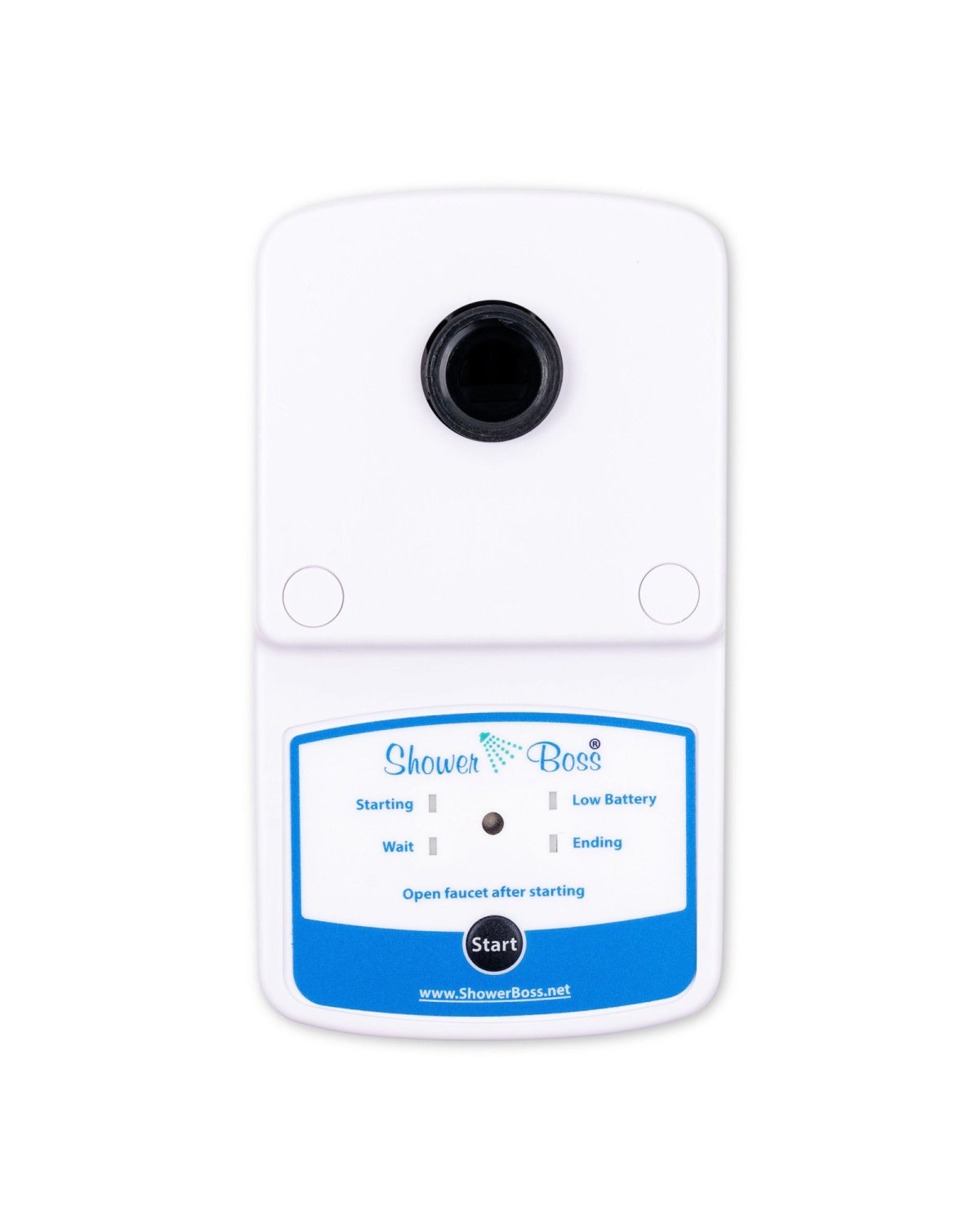
Battery-powered units like the ShowerTimer Battery Unit 9V require no electrical work, six AA batteries power the timer, making them ideal where running new power lines is impractical. They cost $250.00.
For new construction or accessible plumbing, hardwired options provide consistent, maintenance-free operation. For heavy-duty environments, the ShowerBoss® Standard Unit with Brass Solenoid Valve ($320) uses a brass valve rated for high-volume facilities that resists corrosion and handles aggressive pressure better than standard nylon valves.

Installation logistics matter as much as the device. Plan retrofits during low-occupancy periods and batch installations with maintenance staff. For multi-unit facilities, install timers in 5-10 showers first to gather feedback and troubleshoot at smaller scale before rolling out facility-wide.
Commercial Low-Flow Showerheads and Aeration Technology
Low-flow showerheads deliver measurable water savings through aeration, mixing compressed air with water to maintain pressure perception while reducing actual volume. A standard showerhead uses 2.5 GPM. Modern low-flow models operate at 2.0 GPM or lower. At scale across a 50-shower facility, this difference compounds.
The technology works because humans perceive shower pressure primarily through flow velocity and spray pattern, not absolute volume. A well-designed low-flow head maintains velocity through smaller orifices, creating the sensation of adequate pressure; poorly designed models feel weak, which is why selection matters.
Aeration also reduces heating load, a significant operational cost. A 50-shower facility using 2.5 GPM at 7-minute average duration consumes roughly 875 gallons of hot water daily; reducing to 2.0 GPM cuts that to 700 gallons, a 20% reduction in heating energy and substantial annual savings.
When selecting low-flow fixtures, verify flow rate ratings and pressure drop specifications, some heads work well at high pressure but poorly in low-pressure systems.
Commercial Shower Energy Savings: Calculating Your ROI
Start with baseline measurement: record water meter readings for one week during normal operation, calculate average daily usage, and multiply by 365 for annual consumption.
Next, estimate post-retrofit consumption. Timers that cut average shower duration from 12 minutes to 7 minutes, paired with 2.0 GPM low-flow heads, reduce volume per shower by roughly 50-55%.
For a 40-unit apartment complex with 100 daily showers averaging 12 minutes at 2.5 GPM, baseline annual consumption is roughly 1,095,000 gallons, $3,833 annually at $3.50 per 1,000 gallons (water plus wastewater).
Equipment cost for ShowerBoss® timers ranges from $195-210 per unit, so 40 showers cost $7,800-8,400.
Facility Type |
Annual Water Usage |
Current Annual Cost |
Post-Retrofit Cost |
Annual Savings |
Payback Period |
|---|---|---|---|---|---|
40-unit apartment |
1,095,000 gallons |
$3,833 |
$1,789 |
$2,044 |
4 years |
College dorm (200 residents) |
1,825,000 gallons |
$6,388 |
$4,548 |
$1,840 |
9-10 years |
Gym (500 members) |
1,460,000 gallons |
$5,110 |
$3,640 |
$1,470 |
11 years |
Campground (100 sites) |
730,000 gallons |
$2,555 |
$1,820 |
$735 |
13 years |
Commercial Shower Maintenance Checklist for Long-Term Performance
Programmable timers and low-flow fixtures require regular maintenance. Commercial environments, heavy use, hard water, temperature fluctuations, accelerate wear on mechanical components.
Inspection Frequency and Durability Standards
Inspect ShowerBoss® timers quarterly in high-use facilities (gyms, dormitories) and semi-annually in moderate-use settings (apartment complexes, campgrounds). Check for:
- Water leaks around valve connections
- Timer display functionality (if digital)
- Audible solenoid activation when shower is triggered
- Water pressure consistency across multiple showers
- Battery condition (for battery-powered units)
Durability standards for commercial fixtures assume 3-5 years of reliable operation. The ShowerBoss® Standard Unit with Brass Solenoid Valve is designed for commercial use and comes with a heavy duty brass valve. Brass resists corrosion better than standard materials.

Hard water accelerates valve wear by depositing mineral scale on internal components. In hard water areas, descale solenoid valves annually using a commercial descaling solution. This 30-minute process removes mineral buildup and restores full valve function.
Hygiene and Sanitation Compliance
Commercial shower facilities must maintain sanitation standards to prevent bacterial growth and water-quality issues. Programmable timers don't eliminate standing water in pipes, but they reduce stagnation by limiting shower duration and preventing extended idle periods.
Flush all shower lines weekly by running water for 2-3 minutes without users present to remove sediment and bacteria. In facilities with high occupancy and extended idle periods (overnight dorms, closed-season campgrounds), flush more frequently.
Monitor water temperature consistency. Faulty thermostatic mixing valves let temperature fluctuate, creating conditions where Legionella and other pathogens proliferate.
Document all maintenance activities, inspections, repairs, descaling, temperature monitoring. This demonstrates due diligence if regulatory questions arise and helps identify patterns, such as recurring failures in specific fixtures that might indicate a systemic issue.
Selecting and Installing Eco Friendly Shower Solutions for Your Facility
Choosing the right eco friendly shower solutions for business means matching technology to your facility type, occupancy patterns, and infrastructure constraints.
Matching Solutions to Your Facility Type
Multi-family residential buildings (apartments, condos) benefit most from battery-powered or plug-in timers paired with standard low-flow heads. Residents understand utility cost relationships. Timers feel like fair allocation rather than punishment.
College dormitories and student housing require strong, abuse-resistant hardware. Students test limits. They bang on fixtures. They attempt to circumvent controls.
Gyms and fitness centers need rapid water heating recovery and consistent pressure. High occupancy means back-to-back showers during peak hours. Timers prevent extended individual use that would create bottlenecks.
Campgrounds and RV parks face seasonal water scarcity and infrastructure constraints. Battery-powered units avoid electrical dependency. Low-flow technology extends available water supply.
Organizations providing showers to people experiencing homelessness or in transition need durable, simple systems that don't require user sophistication. Battery-powered timers with straightforward on/off operation work best.
Addressing Tenant and User Concerns
Resistance to eco friendly shower solutions for business stems from three concerns: comfort, fairness, and control.
Comfort concerns are legitimate: a 5-minute shower with reduced flow feels different than a 10-minute shower at full pressure.
Fairness concerns arise when users perceive timers as punitive.
Control concerns emerge when users feel their autonomy is removed, and this is worth acknowledging.
Communicate transparently about costs and savings.
Building sustainable shower infrastructure requires matching technology to your facility's constraints and user population. ShowerBoss® timers provide the programmable control layer that transforms passive fixtures into active conservation tools.
Start with a pilot installation in 5-10 showers to test your configuration and gather user feedback, then use that data to refine programming and build confidence for facility-wide deployment.
Frequently Asked Questions
How much water can a business save with eco friendly shower solutions?
Water savings depend on your facility type and baseline usage. Actual savings vary based on current flow rates, shower frequency, and timer settings.
What's the difference between shower timers for businesses and residential units?
Commercial shower timers are built for high-traffic, heavy-use environments. They feature durable components, ADA accessibility compliance, and brass solenoid valves rated for frequent cycling. The ShowerBoss® Standard Unit with Brass Valve ($320.00) is designed specifically for commercial use and new construction. Commercial timers also allow facility managers to set consistent time limits across multiple units, whereas residential models prioritize individual household preferences.
How do I handle tenant or user resistance to shower time limits?
Resistance typically stems from comfort concerns, not actual discomfort. Position timers as a sustainability feature that lowers everyone's utility costs, not as a punishment. Communicate the financial benefit clearly: lower water bills mean lower rent or facility fees. For dorms and shared housing, frame it as environmental responsibility. Set initial timer durations to allow adjustment. Emphasize that timers provide consistent water pressure throughout the duration, not a gradual reduction.
What maintenance do commercial shower timers require?
Commercial timers require quarterly inspections to check for mineral buildup, valve function, and battery or power supply status. Test the timer's ability to shut off water flow completely. Inspect inlet connections for leaks. Clean aerators on low-flow showerheads to prevent clogging from sediment. Document all maintenance in a checklist to track performance and plan replacements.
Can I retrofit existing shower installations with eco friendly solutions?
Yes, but it depends on your plumbing access. The ShowerTimer Battery Unit 9V ($250.00) requires no wiring and works with existing fixtures, making it ideal for retrofits. The Standard Battery Unit ($265.00) works best if you have access to the back of the shower wall. For new construction or full remodels, the ShowerBoss® Standard Unit with 12V power supply ($260-$320.00) offers more durability. Consult installation instructions for your specific facility layout.
How do low-flow showerheads affect water pressure in commercial facilities?
Quality commercial low-flow showerheads maintain adequate pressure by using aeration technology and optimized nozzle design. They reduce flow rate to 1.5-2.0 gallons per minute (compared to standard 2.5 GPM) without creating a weak or unsatisfying spray. Pair low-flow heads with timers for maximum water and energy savings. Test one unit before facility-wide installation if you're concerned about pressure.
What green building standards apply to commercial shower systems?
ADA compliance requires accessible controls and water temperature mixing valves. Check your local building code for specific requirements; standards vary by municipality. Programmable shower timers help facilities meet resource management goals and track usage metrics.