
Reduce Utility Costs in Rental Properties: 2026 Guide
Table of Contents
- Why Utility Costs Eat Into Rental Property Profits
- Rental Property Energy Efficiency Upgrades That Pay Off
- Water Conservation Tips for Landlords
- Should Landlords Include Utilities in Rent?
- Rental Property Utility Billing: Submetering and Ratio Utility Billing
- How to Reduce Utility Costs in Rental Properties: A Prioritized Retrofit Plan
- Measuring Savings and Benchmarking Property Performance
- Rebates, Tax Incentives, and Financing for Upgrades
- Frequently Asked Questions
Last Updated: October 18, 2026
Why Utility Costs Eat Into Rental Property Profits
Utility costs are the silent margin killer in rental real estate.
The deeper issue is that nobody in the building has a reason to conserve. When tenants don't see the bill, a 20-minute shower costs them nothing.
Below, we'll walk through the upgrades, habits, and billing structures that actually reduce utility costs in rental properties, ranked by what we would tackle first.
Rental Property Energy Efficiency Upgrades That Pay Off
Energy efficiency upgrades reduce operating costs while improving tenant comfort, and the highest-return projects are usually the least glamorous. Weatherization and insulation come before anything else.
Sealing Air Leaks and Improving Insulation
Air leaks are the cheapest energy problem to fix and the most commonly ignored. A common mistake is replacing windows before sealing the gaps around them; caulk, weatherstripping, and expanding foam around outlets, door frames, and pipe penetrations cost little and stop conditioned air from escaping. In older buildings, adding insulation to attics and rim joists keeps heat where it belongs during colder months and holds cool air during hotter months.
Heating, Cooling, and Thermostat Settings
Programmable thermostats and clear temperature policies do more for energy use than most landlords expect. Set a written standard for comfortable temperature ranges, install smart thermostats where wiring allows, and service HVAC systems on a schedule. Filters clogged with dust force systems to run longer, which quietly inflates energy bills all year.
Lighting Upgrades and ENERGY STAR Appliances
Swapping incandescent bulbs for LED light bulbs is the fastest lighting win: LEDs use a fraction of the electricity and last years longer. When appliances reach end of life, replace them with ENERGY STAR-certified appliances. The ENERGY STAR program sets the efficiency benchmarks worth requiring in any specification sheet.
| Upgrade | Rough Effort | Typical Payback Feel | Best First Step |
|---|---|---|---|
| Air sealing and caulking | Low, one weekend | Fast | Seal doors, windows, outlets |
| Attic and rim joist insulation | Medium | Steady | Insulate the attic first |
| LED bulb replacement | Very low | Immediate | Replace all common-area bulbs |
| Smart thermostat install | Low to medium | One to two seasons | Program unoccupied hours |
| ENERGY STAR appliance swap | High | Multi-year | Replace at end of life only |
Water Conservation Tips for Landlords
Water conservation is where landlords have the most direct control, and shower time is the biggest lever in most multi-family buildings. Long showers drain both water and the energy used to heat it.
Shower Timers and Fixture Upgrades
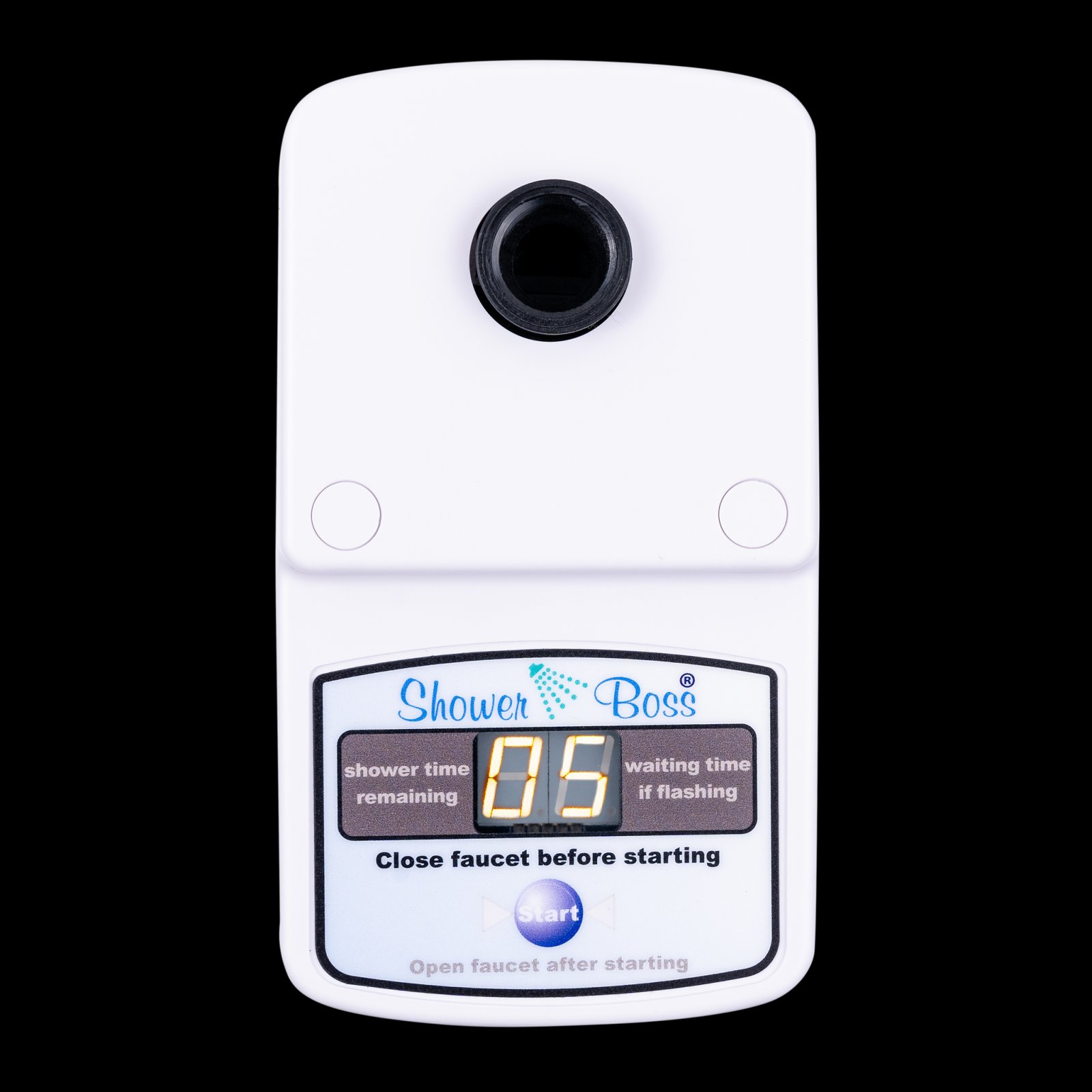
Shower timers give tenants a visible limit without confrontation. ShowerBoss® builds programmable shower timer devices for exactly this use case, and our ShowerTimer Residential Unit with 12V plug-in power supply ($250.00) suits family and shared-home settings where the occupants are known. For commercial and multi-family installations, the ShowerBoss® Standard Unit with brass solenoid valve ($320.00) is built for heavier traffic and is ADA accessible.

Landscaping and Leak Detection
Outdoor water use and silent leaks add up fast. Drought-tolerant landscaping, mulch to hold moisture, and a routine leak walk-through of toilets, hose bibs, and irrigation lines catch the losses that never show up as a complaint. A toilet flapper that fails quietly can waste water around the clock.
Should Landlords Include Utilities in Rent?
Including utilities in rent simplifies leasing and attracts tenants, but it removes every financial incentive to conserve. The trade-off is straightforward: all-inclusive rent is easier to market and harder to control.
Many property owners find a middle path works best. Cover water and trash as a fixed part of rent while tenants pay their own electricity, or set a reasonable usage allowance and bill overages.
Rental Property Utility Billing: Submetering and Ratio Utility Billing
Rental property utility billing determines whether savings actually reach the owner's bottom line.
Master-metered, utilities included. One meter serves the building and the owner pays.
Submetering. Individual meters (or submeters tied to a master meter) are installed per unit, and tenants are billed on their own measured usage.
Ratio utility billing (RUB). The master bill is divided among units by a formula, square footage, occupancy, number of fixtures, or a blend.
ShowerTimer Standard Unit / with 12V Plug-In Power Supply →
Legal Compliance and Tenant Communication
Rules on submetering, RUB, and billing back tenants vary by state and locality, and they are not uniform. Before changing how you bill, confirm requirements with your state housing authority or public utility commission, and check whether your locality imposes additional tenant-notice or disclosure rules. Key questions to resolve in writing:
- Is submetering permitted for this property type, and are there meter-accuracy or certification requirements?
- What tenant notice is required before a billing method changes, and how far ahead must it be given?
- Are there caps, allowances, or affordability protections that limit how much can be passed through?
Communicate any change in writing, well ahead of the effective date, and explain the why, not just the what. Tenants who understand that a submeter bills their actual usage, and that conservation lowers their own bill, are far less likely to dispute the change than tenants who simply see a new line item. Pair the rollout with a plain-language FAQ and a clear path to report leaks or billing errors.
How to Reduce Utility Costs in Rental Properties: A Prioritized Retrofit Plan
If you want to reduce utility costs without wasting capital, sequence matters more than the individual upgrades. The plan below is ordered by cost-effectiveness, cheapest, fastest-payback measures first, so each step funds the next.
- Audit first. Pull 12 months of utility bills and separate them by utility (electric, gas, water, sewer, trash) and by season. The goal is to identify which utility and which season drive the spend before you spend a dollar on hardware. A building whose winter gas bill dwarfs everything else has a different priority list than one bleeding water in summer.
- Seal and insulate. Air sealing (caulk, weatherstripping, foam around outlets, door frames, and pipe penetrations) is the lowest-cost energy fix and typically pays back fastest. Attic insulation comes next; rim-joist insulation after that. Do this before replacing windows, sealing the gaps around existing windows captures much of the benefit at a fraction of the cost.
- Fix leaks and fixtures. Running toilets, dripping hose bibs, and failing flappers waste water around the clock and never generate a complaint. Low-flow showerheads and faucet aerators are inexpensive and compound with the next step.
- Install shower timers. Target the highest-traffic units first. Timers attack both water and the energy used to heat it, and a sample-unit pilot gives you before-and-after metered data to justify the wider rollout.
- Upgrade lighting. Replace incandescent and older fluorescent bulbs with LEDs building-wide, starting with common areas and high-hours fixtures. This is the fastest lighting win and requires no tenant behavior change.
- Add smart thermostats. Program setbacks for unoccupied hours and set a written temperature standard. Where wiring does not allow smart thermostats, programmable units still capture most of the scheduling benefit.
- Replace appliances at end of life. Specify ENERGY STAR-certified models on the ENERGY STAR program specification sheet. Do not replace working appliances purely for efficiency, the payback rarely justifies it, but never install a non-certified unit when a replacement is already needed.
- Revisit billing. Move toward submetering where the law and budget allow, so the savings from steps 1-7 actually reach the owner's bottom line rather than being absorbed by unchanged tenant behavior.
How to Think About Payback
Payback is the upgrade cost divided by the annual savings it produces. The measures at the top of this list, air sealing, leak repair, LED swaps, low-flow fixtures, generally have the shortest paybacks because they are cheap and attack continuous losses. Equipment replacements (HVAC, appliances, water heaters) have longer paybacks and should be timed to end of life rather than done preemptively.
Measuring Savings and Benchmarking Property Performance
Savings you cannot measure are savings you cannot defend at budget time. Benchmark each property against its own prior-year usage, normalized for weather and occupancy, and track a small set of metrics: cost per unit per month, water use per occupant, and energy use per square foot.
Review these numbers quarterly. When a property's usage drifts upward, investigate before renewing service contracts. This discipline also strengthens your case for the next round of upgrades.
Rebates, Tax Incentives, and Financing for Upgrades
Utility rebates and efficiency incentives can offset a meaningful share of upgrade costs, and they change often. Check your local utility's efficiency program and the Database of State Incentives for Renewables and Efficiency for current offerings before you buy. For financing, many utilities and lenders offer on-bill repayment or efficiency loans that let upgrades pay for themselves out of the savings.
Frequently Asked Questions
How can landlords reduce utility costs in rental properties?
Landlords can reduce utility costs by sealing air leaks, upgrading to LED lighting and ENERGY STAR appliances, installing programmable thermostats, and fixing leaks promptly. Water-saving measures like low-flow fixtures and shower timers also cut water and energy bills. A prioritized retrofit plan with payback periods helps focus on upgrades that deliver the fastest savings. Regular maintenance and tenant communication further ensure savings persist.
What are the most cost-effective energy upgrades for rental properties?
The most cost-effective upgrades typically include sealing air leaks around windows and doors, switching to LED light bulbs, and installing programmable thermostats. These low-cost measures often pay back in under two years. Larger investments like insulation and ENERGY STAR-certified appliances offer long-term savings but require higher upfront costs. Prioritize upgrades with the shortest payback first, then reinvest savings into bigger projects.
Should utilities be included in rent?
Including utilities in rent simplifies billing and can attract tenants, but it may encourage higher usage because tenants don't see the direct cost. Landlords can offset this by installing water-saving devices like shower timers and submetering to bill back actual usage. The decision depends on local regulations, property type, and administrative capacity. Many landlords use a hybrid approach: include water and trash, but have tenants pay electricity.
How can landlords encourage tenants to conserve water and energy?
Landlords can encourage conservation by installing easy-to-use devices like programmable shower timers, providing clear information on energy-saving habits, and offering incentives for lower usage. Communication is key: explain the benefits and address comfort concerns. Submetering or ratio utility billing can also motivate tenants by linking usage to costs. Regular reminders and maintenance checks help sustain conservation efforts.
How can tenants lower apartment utility bills?
Tenants can lower utility bills by taking shorter showers, using LED bulbs, adjusting thermostat settings when away, and reporting leaks promptly. Unplugging electronics and using energy-efficient appliances also helps. Simple habits like washing clothes in cold water and air-drying dishes reduce energy use. If utilities are included in rent, tenants can still conserve to support sustainability and potentially lower future rent increases.
Are utilities tax deductible on rental property?
Yes, utilities paid by the landlord for a rental property are generally tax deductible as ordinary and necessary business expenses. This includes water, sewer, electricity, gas, and trash collection. However, if tenants pay utilities directly, those costs are not deductible for the landlord. Keep detailed records of utility expenses to support deductions. Consult a tax professional for specific guidance.
How can landlords reduce water use in multifamily properties?
Landlords can reduce water use by installing low-flow showerheads, faucet aerators, and toilets. Shower timers like ShowerBoss® programmable units limit shower duration and cut water consumption. Fixing leaks promptly and using sub-metering to bill back actual usage also encourage conservation. Landscape irrigation controls and native plants further reduce outdoor water use. Regular audits help identify savings opportunities.
Cutting utility overhead starts with the losses you can control today, and shower time is the most overlooked of them. ShowerBoss® builds programmable shower timers with 12V plug-in power supplies, ADA-accessible designs, and heavy-duty brass valve options for commercial traffic, so you can cap water waste without ripping out existing fixtures. Get started with ShowerBoss® and turn water conservation into a measurable line-item saving across every unit you manage.