
Are Durable Shower Timers Worth It for High-Traffic Facilities?
Last Updated: October 30, 2026
Quick Summary
Durable shower timers for high traffic are worth it when you match the model to your plumbing access and power availability. For commercial and new-construction projects, the Standard Unit with Brass Solenoid Valve at $320.00 pairs a heavy-duty brass valve with 12V plug-in power. Battery units suit remodels or sites without outlets.
- A heavy-duty brass solenoid valve is the option suited to valves cycling dozens of times a day.
- Plug-in 12V units do not require battery changes, while battery units need regular checks.
- For dorm, gym, or campground showers, look for at least IPX5 and sealed controls.
- Mount the control box on a stud or use heavy-duty anchors rated for repeated button presses.
- Monthly, test the shutoff and check the display for fogging.
Table of Contents
- Quick Comparison: Five Durable Shower Timers for High-Traffic Use
- What Makes a Shower Timer Durable Enough for High-Traffic Facilities?
- Waterproof Shower Countdown Timer: What IP and Water-Resistance Ratings Actually Mean
- Automatic Shower Timer with Shutoff Valve: How Flow Control Works
- Shower Timer for Dorms: Readability, Tamper Resistance, and Shared-Use Design
- Commercial Shower Timer Maintenance Guide: Installation, Cleaning, and Service Life
- Which ShowerBoss Timer Fits Your Facility?
- Frequently Asked Questions
Quick Comparison: Five Durable Shower Timers for High-Traffic Use
Durable shower timers for high traffic are flow-control devices built to survive constant use in shared bathrooms, and the right model depends on your plumbing access, power availability, and how hard residents are on fixtures. At ShowerBoss®, we build programmable units that shut off water at a set time, and below we compare our five models on price, power source, valve type, and best use case.
| Model | Price | Power | Valve | Best For |
|---|---|---|---|---|
| Standard Unit with Brass Solenoid Valve | $320.00 | 12V plug-in | Heavy-duty brass | Commercial, new construction |
| Standard Battery Unit | $265.00 | Battery | Standard | Remodels with rear wall access |
| ShowerTimer Standard Unit, 12V Plug-In | $260.00 | 12V plug-in | Nylon (brass upgrade $65) | Shared housing, rentals |
| ShowerTimer Battery Unit 9V | $250.00 | 6 AA batteries | Standard | Sites without outlets |
| ShowerTimer Residential Unit, 12V Plug-In | $250.00 | 12V plug-in | Nylon | Known-user households |
If you want a broader roundup before deciding, our roundup of water-saving shower timers compares more options side by side.
What Makes a Shower Timer Durable Enough for High-Traffic Facilities?
Durability in a shared bathroom comes down to three things: valve quality, mounting that survives constant handling, and electronics sealed against steam. A timer that fails in a dorm typically fails at the valve or the wiring, not the display.
The brass solenoid valve matters most. In high-traffic use, valves cycle dozens of times a day, and a heavy-duty brass valve is the option suited to that cycling. The Standard Unit with Brass Solenoid Valve includes this heavy-duty brass valve.
Battery choice also drives service life. Plug-in 12V units do not require battery changes. Battery units suit sites with no outlet nearby, but plan for regular battery checks. Our explanation of how the timer and valve work together walks through the mechanism if you want the detail before buying.
Waterproof Shower Countdown Timer: What IP and Water-Resistance Ratings Actually Mean
A waterproof shower countdown timer is rated by its IP code, and the second digit is the one that matters in a shower: it tells you how well the housing resists water spray. Higher second digits mean better protection from splashing and steam. But most buyers misread the rating, so here is how to interpret it for a shared shower rather than a dry bathroom counter.
Reading the IP code. The first digit covers solids (dust, lint, and the grit that accumulates in shared bathrooms); the second covers water. A rating like IPX4 means the housing is protected against water splashing from any direction. IPX5 means protection against low-pressure water jets from a nozzle. IPX6 means protection against powerful jets. IPX7 means temporary immersion, and IPX8 means continuous immersion. For a wall-mounted shower timer, IPX4 through IPX6 is the practical range; IPX7 and IPX8 are overkill unless the unit is routinely submerged during cleaning.
What the rating does not tell you. An IP rating describes the housing's resistance to water ingress under test conditions, it does not describe resistance to steam, soap scum, cleaning chemicals, or repeated button presses with wet hands. A unit can carry an IPX5 rating and still fail in a communal shower if its buttons are not sealed, its display gasket is thin, or its battery compartment lacks a proper O-ring. In high-traffic bathrooms, steam condenses on cool surfaces and works its way into seams that a splash test never stresses.
What to look for beyond the rating. Sealed membrane buttons rather than raised mechanical buttons. A gasketed or glued display window. A battery door with a rubber seal and a screw, not a snap latch. A housing with no exposed screw bosses on the wet side. These details matter more than the digit on the box, because they determine whether the unit survives years of daily spray and cleaning rather than a single test.
Matching the rating to the environment. A private bathroom with a curtain or door sees less direct spray than a communal shower room where multiple heads run at once and water hits the housing from every angle. For a dorm, gym, or campground shower, look for at least IPX5 and sealed controls; for a residential bathroom, IPX4 with good gasketing is usually sufficient. If the unit is mounted where cleaning staff spray it directly with a hose, treat IPX5 as the minimum and confirm the battery compartment is sealed.
Read the rating before you buy, and match it to the environment. A unit rated only for light splashes will struggle in a communal shower where spray hits the housing from every angle. Look for sealed buttons, a gasketed display, and a housing built for wet rooms rather than a dry bathroom counter.
Automatic Shower Timer with Shutoff Valve: How Flow Control Works
An automatic shower timer with shutoff valve controls water by closing a valve when the set time runs out, rather than just beeping at the user. The timer counts down, then the valve stops flow, so the shower ends whether or not anyone is paying attention.
That distinction matters for facilities where residents ignore a warning chime. A countdown-only clock depends on cooperation; a shutoff valve enforces the limit. Our units combine a programmable timer with a valve that closes at the end of the setting.
ShowerBoss® Standard Unit / UPGRADE / with Brass solenoid Valve →
Installation depends on the model. If you want to see the mechanism in action before committing, our installation demos show how each setup goes together.
Shower Timer for Dorms: Readability, Tamper Resistance, and Shared-Use Design
Shared student housing places heavy demands on any bathroom fixture.
Our dorm-specific guidance covers product fit for shared, high-traffic bathrooms.
Commercial Shower Timer Maintenance Guide: Installation, Cleaning, and Service Life
A commercial shower timer maintenance guide starts with correct installation, because most premature failures trace back to a rushed setup. Mount the unit securely, protect the wiring, and confirm the valve closes fully before handing the bathroom back to users. Beyond that, the details that separate a unit that lasts a semester from one that lasts a decade come down to materials, seals, and a simple service schedule.
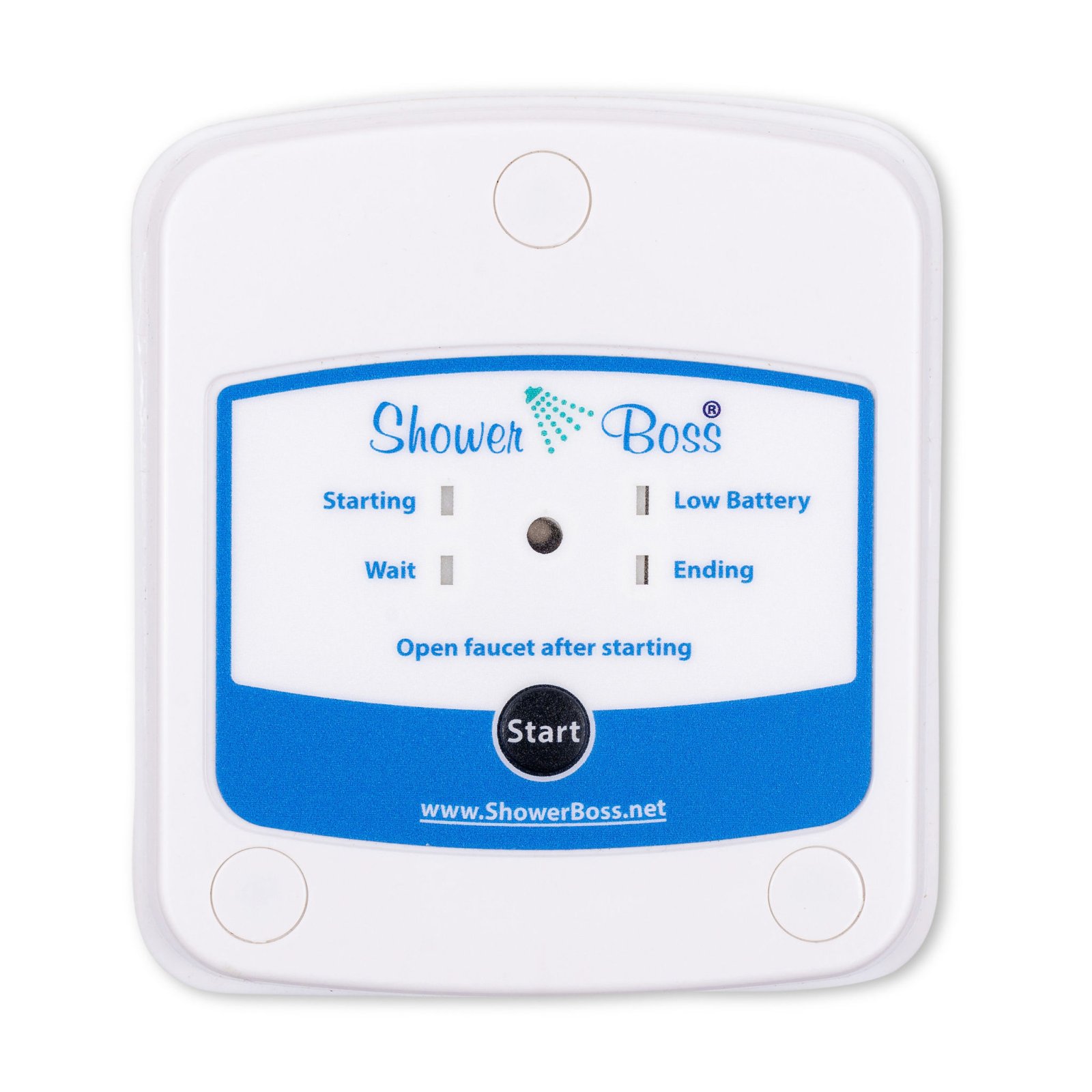
Installation checklist for high-traffic bathrooms. Mount the control box on a stud or use heavy-duty anchors rated for the housing weight plus the pull of repeated button presses. Keep the wiring in conduit or a sealed raceway, and leave a service loop so the unit can be removed without cutting wires. For inline valves, confirm the valve orientation matches the flow arrow and that the actuator has full travel before the wall is closed.
Cleaning without shortening service life. Wipe the housing with a damp cloth and mild soap. Avoid abrasive pads, bleach-heavy sprays, and solvent cleaners on the display window, they cloud polycarbonate and degrade gaskets. Do not spray water directly into the battery compartment or button seams, even on a high IP-rated unit. For shared bathrooms, a daily wipe-down and a weekly check of the display and buttons is usually enough; heavy mineral deposits can be removed with a diluted vinegar solution on a soft cloth, then rinsed and dried.
Expected service life and what drives it. Service life depends on water quality, cycle count, and valve type. A heavy-duty brass solenoid valve is the option designed for commercial use. A common pattern in shared facilities is that the valve or wiring fails before the display does, which is why the brass valve is worth the upgrade in high-traffic installs. Battery units add a maintenance variable: log battery changes so a dead unit never surprises you mid-semester, and replace batteries on a schedule rather than waiting for a failure.
Service schedule that works. Monthly: test the shutoff and check the display for fogging. Quarterly: inspect the valve for mineral buildup and confirm the actuator moves freely. Annually: check mounting anchors, replace batteries on battery units regardless of charge, and inspect wiring connections for corrosion. Watch out: skipping the initial valve check is the most common cause of a unit that runs past its time limit, and a valve that does not fully close wastes water silently until someone notices.
Which ShowerBoss Timer Fits Your Facility?
Match the model to your plumbing and power, and the choice becomes straightforward. For commercial and new-construction projects, the Standard Unit with Brass Solenoid Valve at $320.00 gives you the heavy-duty valve and 12V plug-in power that high-traffic bathrooms need. For remodels with rear wall access, the Standard Battery Unit at $265.00 skips the wiring. Sites without outlets can use the Battery Unit 9V at $250.00, though it has no digital countdown display.

Best for: property managers, campgrounds, dorms, and gyms running shared showers daily. Skip if: you need a single residential unit for a private family bathroom.
Frequently Asked Questions
What features should a shower timer have for high-traffic use?
Look for a shutoff valve, such as the brass valve option on the Standard Unit. Look for models designed for commercial or new-construction installation, like the ShowerBoss Standard Unit with Brass Solenoid Valve at $320, which shuts water flow at the end of the set time. Simple controls and easy-to-read digits reduce user error when dozens of people share the same stall each day.
Are waterproof shower timers suitable for commercial bathrooms?
Yes, but check what waterproof means for each model. A waterproof shower countdown timer should resist water spray and steam from direct use, not just humidity.
How do commercial shower timers help reduce water use?
They limit shower duration by shutting off water flow at a set time, which removes the option to leave a shower running unattended. Facilities with shared bathrooms, campgrounds, and dorms see the biggest gains because the timer applies the same limit to every user. Pairing a time limit with an automatic shutoff valve also stops water waste from taps left on. Property managers and campground operators use this to lower utility bills without replacing existing fixtures.
How often should a shower timer be inspected or maintained?
Inspect timers monthly in high-traffic settings: check the valve for mineral buildup, confirm the timer still counts down and shuts off, and test the mounting for looseness. Clean the display and housing with a damp cloth, not abrasive cleaners. Replace batteries on a schedule if you use a battery-operated model. A commercial shower timer maintenance guide should be posted for staff so checks happen consistently and small valve issues are caught before they become leaks.
Can a shower timer be installed on an existing shower?
It depends on access to the plumbing. Units like the ShowerBoss Standard Battery Unit at $265 are suited to new construction, remodeling, or installations where you can reach the back of the shower wall. If the wall is closed, a plug-in model such as the ShowerBoss Standard Unit with 12V Plug-In Power Supply at $260 may fit better because it needs a power outlet rather than hardwiring.
High-traffic showers punish weak hardware, and the wrong timer costs you in repairs and wasted water. ShowerBoss® builds programmable timers with heavy-duty brass valve options, 12V plug-in or battery power, and ADA-accessible designs for commercial and shared facilities. Get started with ShowerBoss® and put a reliable time limit on every shower in your building.
