
Is a Shower Timer With Shut-Off Valve Worth the Cost?
Table of Contents
- How Shower Timers With Shut-Off Valves Work
- ShowerBoss® Models and Their Prices
- Valve Types: Nylon Versus Brass
- Installation Costs and Whether You Can DIY It
- Side-by-Side Cost Comparison by Valve Type and Installation
- Estimating Water and Energy Savings Against the Upfront Cost
- Choosing the Right Unit and Getting It Installed
- Frequently Asked Questions
Last Updated: November 2, 2026
Shower timers with shut-off valves promise a simple trade: a fixed price up front for less water and less hot-water energy over time. The real question is whether the numbers justify the cost for your property. This guide breaks down what you pay, what you get, and how to decide whether a timer is worth it for your building, campground, gym, or dorm.
How Shower Timers With Shut-Off Valves Work
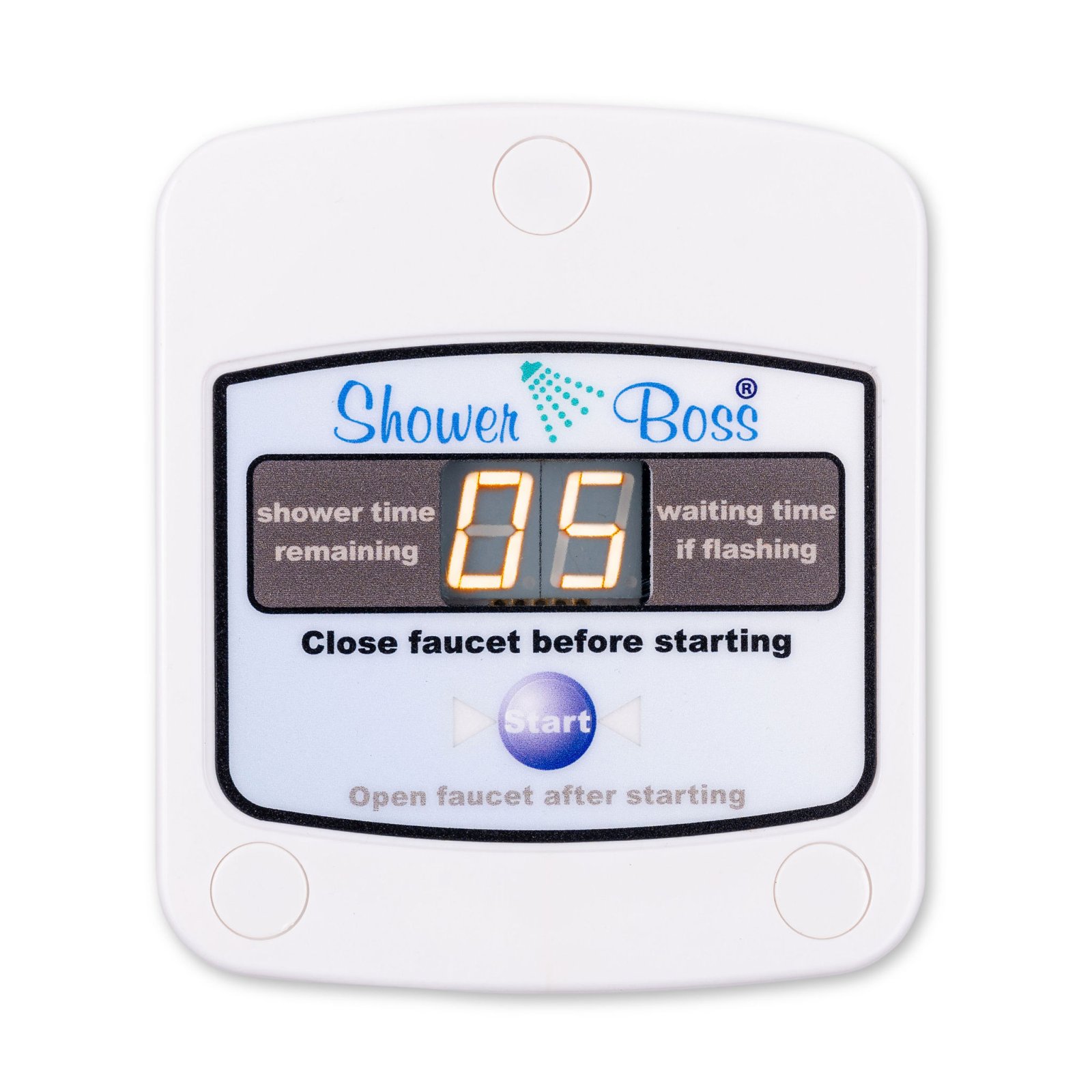
A shower timer with a shut-off valve is a control unit that stops water flow when a preset time runs out. The user starts the shower, the timer counts down, and the valve closes automatically at the end of the cycle.
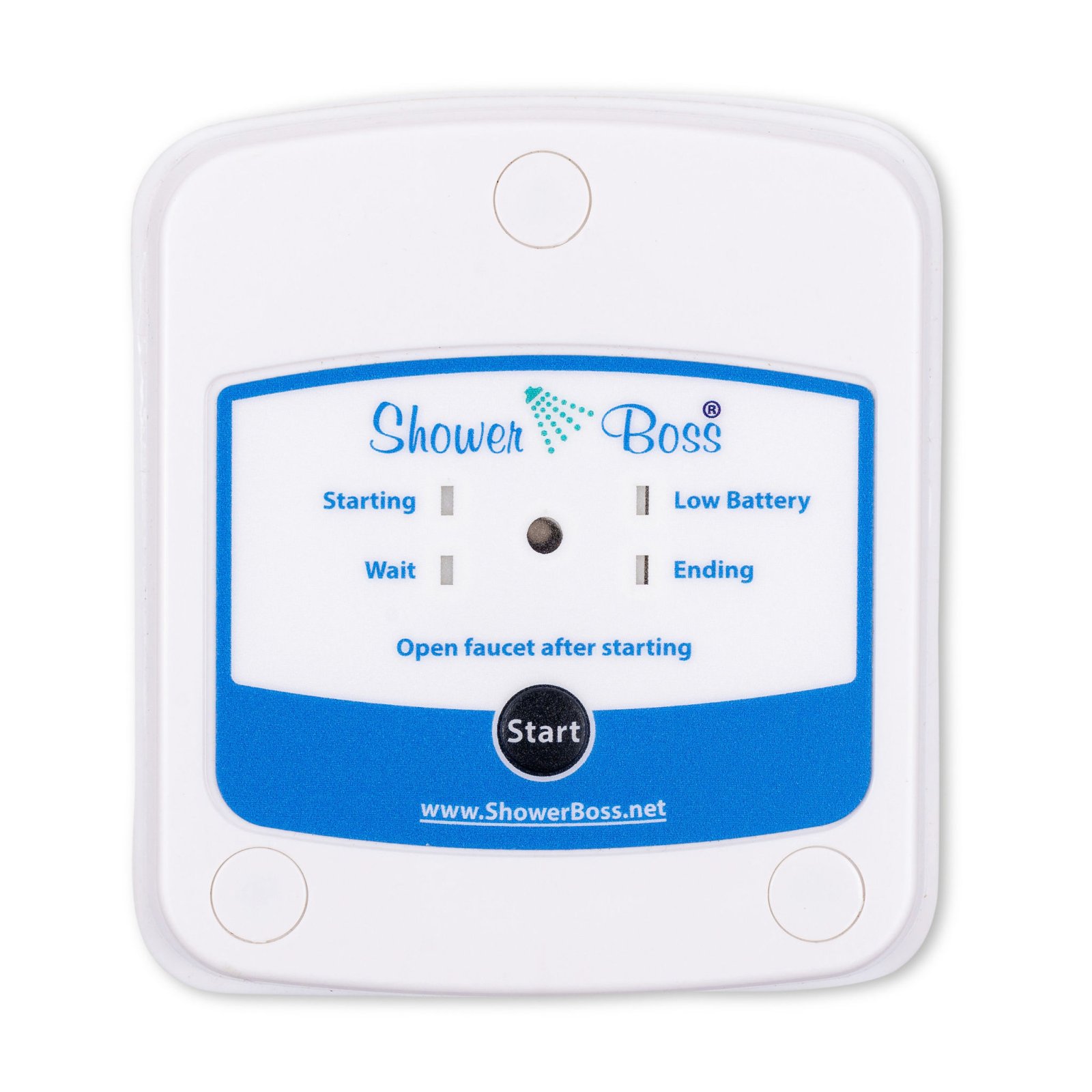
The timer is the brain and the valve is the muscle. The control unit mounts on the wall; the valve sits in the supply line behind the shower. Power comes from a 12-volt plug-in supply or batteries, depending on the model.
Valve type matters more than most buyers expect. Nylon valves are standard in most units, while brass solenoid valves are heavier-duty and suited to commercial use.
ShowerBoss® Models and Their Prices
ShowerBoss® offers several configurations, and the right one depends on how the unit will be installed and used. Prices below are listed in USD as currently published.
| Model | Power | Valve | Price (USD) | Best Fit |
|---|---|---|---|---|
| ShowerTimer Battery unit 9V | 6 AA batteries (not included) | Included | $250.00 | Homes and areas without easy outlet access |
| ShowerTimer Standard Unit with 12V Plug-In Power Supply | 12V plug-in | Nylon | $260.00 | New construction and remodeling |
| ShowerTimer Residential Unit with 12V Plug-In Power Supply | 12V plug-in | Nylon | $250.00 | Households and shared homes |
| Standard Battery Unit | Battery | Varies | $265.00 | Remodels with access behind the shower wall |
| ShowerBoss® Standard Unit UPGRADE with Brass Solenoid Valve | 12V plug-in | Heavy-duty brass | $320.00 | Commercial use and ADA-accessible installations |
Pros and cons by model:


- Battery unit 9V: Pro: no wiring, battery-powered for quick setup. Con: batteries are an ongoing cost.
- Standard Unit with 12V plug-in: Pro: consistent power and ADA-accessible design. Con: needs a nearby outlet.
- Residential Unit with 12V plug-in: Pro: lowest-priced plug-in option at $250.00, with customizable time settings. Con: less suited to high-traffic commercial settings.
- Standard Battery Unit: Pro: good for remodels and new builds. Con: highest price among nylon-valve options.
- Standard Unit UPGRADE with Brass Valve: Pro: heavy-duty valve for commercial use. Con: highest price among the listed models.
The brass-valve upgrade is also available on the standard plug-in unit as a separate option, listed at a $65 upgrade. Brass solenoid valve upgrade for the standard unit is available if you have already settled on a heavy-duty valve.
Valve Types: Nylon Versus Brass
Valve type is one part of the decision alongside fit. The other half is fit: whether the valve matches your supply line, flow rate, water pressure, and power source.
Nylon valves are lighter and less expensive. They are used in the ShowerBoss® residential and standard plug-in configurations. Nylon is a good match for a single-family home or a light-use shared bathroom where the valve cycles a handful of times per day.
Brass solenoid valves are heavier and cost more, and are described as heavy-duty for commercial use. The ShowerBoss® brass upgrade is listed at $320.00 versus $260.00 for the standard nylon plug-in unit, a $60.00 difference at purchase.
Compatibility checklist before you order
A mismatched valve is the most common cause of leaks, weak flow, or a valve that fails to seat. Run through these checks before you buy:
- Connection size and thread: Confirm the valve's inlet and outlet match your supply line. Adapters exist, but each one is an extra leak point.
- Flow rate: Match the valve's rated flow to your showerhead's GPM. A valve rated below your fixture's flow chokes performance; one rated far above wastes money.
- Water pressure: Check static pressure with a gauge. High-pressure commercial lines may need a regulator or heavier-duty valve.
- Power source: Plug-in units need a nearby outlet or 12V supply; battery units need access for battery changes. Decide before the wall goes back up.
- Retrofit access: If the wall is finished, confirm you can reach the supply line without major demolition. If not, budget for a plumber and drywall repair.
What happens when the valve or power fails
Failure behavior matters as much as durability, especially for children, older adults, and people with mobility needs. Ask three questions of any unit:
- Does the valve fail open or closed? A valve that fails closed stops water entirely, safe for conservation, but a problem if someone cannot override it.
- Is there a manual override? Users should be able to restart or bypass the timer. Confirm the override is reachable and simple enough for a guest or resident.
- What happens on battery or power loss? Battery units typically stop counting down; plug-in units lose the timer function. Neither should leave a user stranded mid-shower without a manual path to water.
If your property serves children or people with limited mobility, check whether a unit offers a clear override before choosing a configuration, and consider the ADA-accessible configurations ShowerBoss® lists for commercial installs.
Installation Costs and Whether You Can DIY It
The purchase price is only part of the total. Installation is the other major cost, and it varies sharply depending on whether your maintenance staff can handle the work.
A basic plug-in or battery unit mounts on the wall and connects to the supply line. Whether a maintenance team can complete installation without a plumber depends on their comfort with supply lines and access to the back of the shower wall.
Retrofit installations in finished bathrooms are harder. Access to the valve may require cutting into the wall, pushing the job toward a licensed plumber and adding cost. Check local permit requirements first, since some jurisdictions require a permit for any supply-line work.
ShowerBoss® units are described as suitable for remodeling and, in some configurations, ADA-accessible installations. If your installation involves unusual access, a tight wall cavity, or a custom layout, Helpful ideas with custom installation needs can help you plan the job before you commit to a configuration.
Side-by-Side Cost Comparison by Valve Type and Installation
The table below compares total upfront cost by configuration. It uses only the published prices and does not include labor, which depends on your local rates and how difficult the install is.
| Configuration | Unit Price (USD) | Valve | Installation Difficulty | Estimated Fit |
|---|---|---|---|---|
| Battery unit 9V | $250.00 | Nylon (included) | Low, no wiring | Retrofits without outlet access |
| Residential plug-in | $250.00 | Nylon | Low to moderate | Households and light commercial |
| Standard plug-in | $260.00 | Nylon | Moderate | New construction and remodels |
| Standard Battery Unit | $265.00 | Varies | Moderate | Remodels with rear wall access |
| Standard Brass Upgrade | $320.00 | Brass solenoid | Moderate | Commercial and high-traffic use |
The spread between the cheapest and most expensive configuration is $70.
Estimating Water and Energy Savings Against the Upfront Cost
The payback question depends on three inputs: how much water a shower uses, how much of that water you heat, and what you pay for water and energy. A worked estimate you can adjust to your property is more useful than a general statement that timers save water.
A worked example you can scale
Start with a single shower. A standard showerhead flows at roughly 2.5 GPM; newer low-flow heads run closer to 1.8-2.0 GPM. At 2.5 GPM, a 10-minute shower uses about 25 gallons. If a timer cuts the average shower to 7 minutes, you save about 7.5 gallons per shower.
Now scale to a household. Assume four showers per day:
- Water saved per day: 4 × 7.5 = 30 gallons
- Water saved per month: about 900 gallons
- Water saved per year: about 10,950 gallons
Apply your utility rate. Residential water and sewer combined commonly run a few cents per gallon depending on your municipality, check your own bill. At $0.01 per gallon combined, 900 gallons a month is about $9.00 in water and sewer savings.
Adding the hot-water energy piece
Most shower water is heated, and water heating is one of the larger energy uses in a home. A common planning figure is roughly 0.2 kWh per gallon for a conventional electric water heater raising water from groundwater temperatures to shower temperature. At 900 gallons a month, that is about 180 kWh.
Combine the two: about $9.00 in water and sewer plus about $27.00 in water heating, or roughly $36.00 a month for this four-shower household. Against a $250.00 unit, simple payback is about seven months. A two-person household at half the showers would see roughly half the savings and a payback closer to 14 months.
What changes the answer
- Household size and shower frequency: More showers per day shorten payback; a single occupant lengthens it.
- Flow rate: A 2.5 GPM head saves more per minute than a 1.8 GPM head, but the low-flow head may already be cutting use.
- Utility rates: Water, sewer, and electricity rates vary by municipality and season. Use your actual bill, not a national average.
- Behavior: A timer only limits shower length when people accept it. Facilities see the biggest gains where users cannot easily override the cycle.
- Maintenance: Battery replacement and occasional valve service are real ongoing costs; factor them into total ownership.
Total ownership, not just sticker price
The purchase price is visible, but total ownership also includes installation labor, permit fees where required, batteries or power, and any valve service. Run the payback math on total installed cost, not shelf price.
Choosing the Right Unit and Getting It Installed
Start with the installation situation, not the price. If you are building new or remodeling, the standard plug-in unit at $260.00 or the Standard Battery Unit at $265.00 are listed for that use.
For commercial or high-traffic settings, the brass-valve upgrade at $320.00 is the safer choice. For households and shared homes where users are known, the residential plug-in unit at $250.00 covers the basics.
Once you have chosen a model, confirm the valve type against your plumbing, check whether your jurisdiction requires a permit, and decide whether your maintenance team can handle the install. Browse the full range on the ShowerBoss® product page to compare configurations before you order.
Frequently Asked Questions
How much does a shower timer with a shut-off valve cost?
ShowerBoss units with a 12V plug-in power supply and nylon valve start at $260.00 for the Standard Unit and $250.00 for the Residential Unit. The Standard Unit upgrade with a heavy duty brass solenoid valve costs $320.00. The Battery Unit 9V is listed at $250.00 and requires six AA batteries, which are not included. Budget for installation labor on top of these prices if you do not install the unit yourself, and check whether your fixtures need the brass valve upgrade before you order.
How does an automatic shower timer shut-off valve work?
The timer sets a time limit for the shower. When the limit is reached, the unit closes the valve in the water line and stops the flow. Shower timers with brass solenoid valves shut the water flow at the end of your time setting. Users can adjust the time limit to suit their household, and the Residential and Standard models include adjustable settings.
Can you install a shower timer without professional help?
Installation depends on your wall and plumbing access. The Standard Battery Unit and Standard Unit are best suited for new construction, remodeling, or places where you can reach the back of the shower wall. Your maintenance staff may be able to install a unit if they are comfortable working with supply lines and wiring. The product documentation includes installation instructions, so print them before starting. If the shower lacks access behind the wall, plan for a licensed plumber.
What is the difference between a shower timer and a shut-off valve?
A shower timer is the control unit that tracks time and sends the signal. A shut-off valve is the hardware in the water line that stops the flow. ShowerBoss timers include a valve: the Residential and Standard units come with a nylon valve, and the Standard Unit upgrade includes a heavy duty brass solenoid valve. When comparing products, confirm whether the valve is included, since a timer without one cannot stop water flow.
